

flexible PCB board improve product reliability
A flexible PCB board has the potential to boost product reliability in several ways. For one, it can eliminate the need for connectors between rigid boards and flex circuits, which increases the reliability of the connection and reduces assembly errors. In addition, a flexible circuit can withstand a wider range of environmental stresses than a rigid one, making it suitable for use in more locations and environments.
Flex circuits are also increasingly being used in devices that connect to the Internet of Things, such as smart home gadgets and industrial sensors. In the future, they will be even more prevalent in wearables and implantable medical devices. However, the reliability of a flex circuit can be challenged by the different forces it encounters in daily life, including vibrations and mechanical shocks. In order to meet these challenges, the PCB must be designed with high-quality materials and robust connections.
The reliability of a flexible pcb board can be improved by selecting the right materials, calculating minimum bend radii, designing proper flex zones and careful component placement. It’s also important to optimize the layer stack-up and implement specialized trace routing techniques. This will ensure that the conductive paths have adequate length and the board can handle dynamic bending.
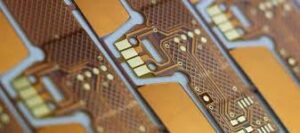
How does a flexible PCB board improve product reliability?
In addition, a flexible PCB board can be made with thinner layers and smaller parts than a rigid one, allowing it to support higher circuit densities. This allows for tighter signal lines and better signal integrity, which is especially important in areas of the circuit that will be subjected to significant bending or twisting. Finally, a flex circuit can be shielded from electromagnetic interference (EMI), reducing noise and controlling impedance.
As a result of the advantages mentioned above, it’s no surprise that flexible pcb boards are gaining popularity in various industries, from consumer electronics to automotive and aerospace applications. As they continue to expand into a variety of sectors, manufacturers are faced with increasing demands to produce more reliable products. This is why it’s essential to incorporate the reliability of a flex circuit into the design process as early as possible.
A Printed Circuit Board (PCB) is an electronic circuit board that contains the components of a device and connects them together using soldered joints. The components can include metals such as copper, traces, connectors and other electrical elements. The main purpose of a PCB is to convey signals between components, and it can be used in any device that requires an electric current.
There are many different types of Printed Circuit Boards, each with its own advantages and disadvantages. For example, a single-sided PCB can be created with a base dielectric layer, an adhesive layer, a conductor layer and a flexible cover layer. This type of PCB has a low production cost and simple manufacturing process, resulting in excellent reliability. A double-sided flex circuit has the same structure with an additional layer of copper and plated holes — known as vias – to conduct between layers.